
I recently read a viral article titled “I’ll Instantly Know You Used ChatGPT If I See This.” The author confidently points out linguistic “tells” that, in his opinion, instantly identify AI-generated content — poetic metaphors, overuse of em dashes (I personally love the em-dash and prefer it over ellipses), the word “delve,” and the horror of a clean, typo-free resume.
And I get it, kind of.
Yes, AI has patterns. Yes, it sometimes sounds like a Shakespearean robot trying to teach a TED Talk in a cardigan. But here’s the thing: so do people.
Many of the so-called “tells” of ChatGPT include: polished prose, metaphorical phrasing, and even the use of words like “navigate” or “realm.” But these are also the habits of actual writers. Good writers. Published writers. People who think deeply, edit carefully, and actually like words.
To assume that someone’s writing must be AI generated just because it’s well-structured, poetic, or articulate? That’s not clever deduction. That’s dismissive.
What’s more, the argument implies a kind of literary gatekeeping, as if only those who write with jagged syntax, sloppy transitions, or clumsy metaphors are “real” and “authentic.” Sorry, but no. Humans are capable of being eloquent. That doesn’t make them synthetic.
Let’s also be honest: ChatGPT is trained on a massive corpus of human writing. So when it mimics “the rain didn’t stop, but for the first time in a long time, Mira did,” it’s drawing from centuries of storytelling. You can dislike the style but mocking it as robotic ignores the reality that many people write like that. Some of us even love to.
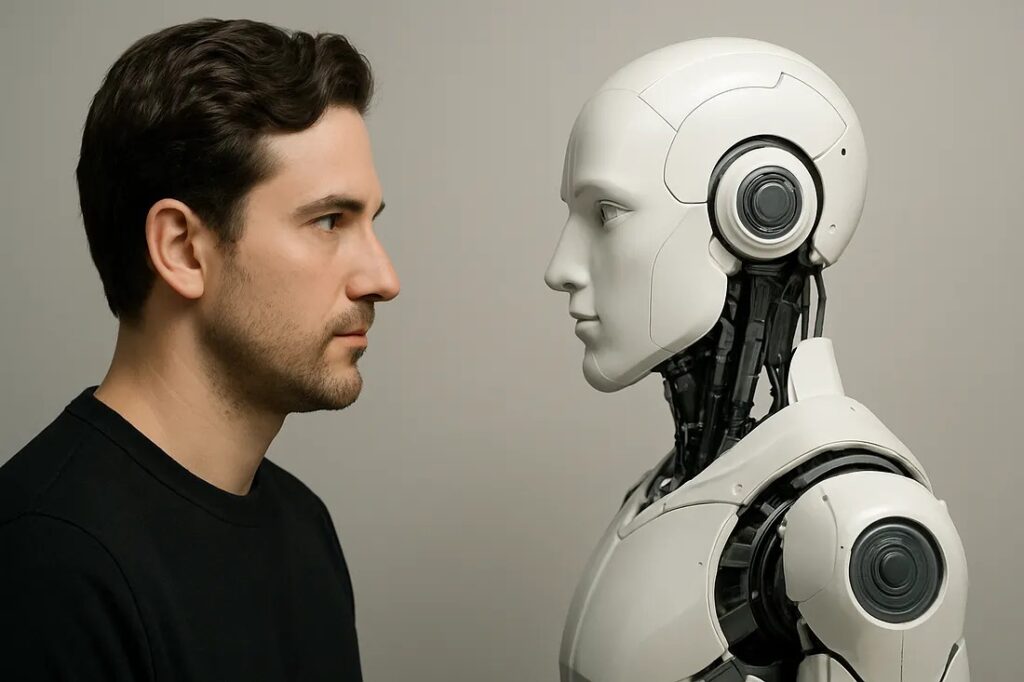
Ironically, we’ve now reached a place where AI is accused of sounding too human, while humans are accused of sounding too AI. That’s a dangerous cycle , one that undermines not just machine learning, but human creativity.
The truth is, the line between AI assisted and human-created content is blurry. Many brilliant writers now use tools like ChatGPT for brainstorming, outlining, or editing; not because they can’t write, but because they want to write better. Dismissing their work outright because it doesn’t match your personal style is more about ego than accuracy.
And no — you cannot “always tell.” You can guess. You can speculate. You can develop instincts based on tone and patterns. But you can’t know for sure. And if someone known for writing well suddenly submits something polished, maybe, just maybe , it’s because they wrote it well.
Don’t reduce every strong sentence to a screenshot of a prompt box.
Real writers evolve. They experiment. They use tools. They delve, if they feel like it. And sometimes, they even enjoy a good em dash.
